
Why You Shouldn’t Ignore Feeling Tired All the Time
Why am I always tired, even after a full night’s sleep? If you feel tired…

Cold vs flu – how do you know which one you have?
The difference between a cold vs flu comes down to how quickly symptoms appear and how severe they are…











Cold vs flu – how do you know which one you have?
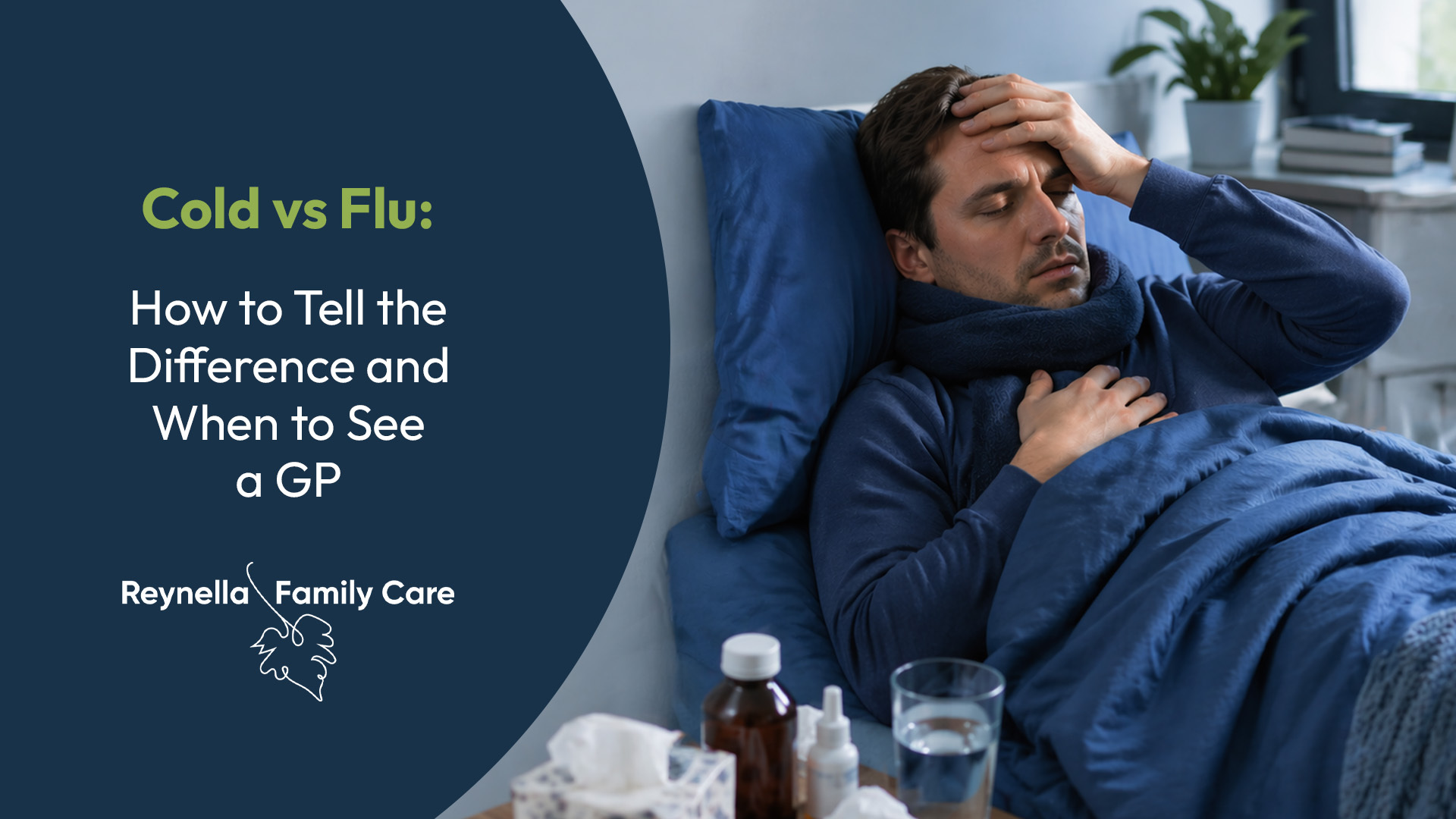
The difference between a cold vs flu comes down to how quickly symptoms appear and how severe they are. A cold is usually mild and develops gradually, while the flu tends to come on suddenly with more intense symptoms like fever, body aches and fatigue. Knowing the difference can help you decide how to manage your symptoms and when to see a GP.
As we head into the cooler months, understanding cold vs flu symptoms becomes especially important, as both are more common during this time of year.
When comparing cold vs flu, the symptoms can overlap, but there are some key differences.
Cold symptoms:
Flu symptoms:
The flu tends to affect your whole body, while a cold is usually limited to your upper respiratory system.
A common question people ask is: do I have a cold or flu?
If your symptoms are mild and you’re still able to go about your day, it’s more likely a cold. However, if you feel completely run down, develop a fever, or experience body aches, it could be the flu. It’s also important to note that symptoms can overlap with other illnesses, which is why monitoring how your condition progresses is key.
One of the more serious concerns we get a lot is “can the flu turn into pneumonia?” and the answer is yes, in some cases. While most people recover from the flu without complications, it can lead to more serious infections like pneumonia, particularly in older adults, young children, or those with underlying health conditions. If you’d like to learn more about how the flu can progress into pneumonia, you can read more here on this Bupa article: Can the flu lead to pneumonia?
Another common concern is “when are you contagious with the flu?”
People with the flu are typically contagious from:
This is why the flu can spread quickly, especially in households, workplaces, and schools.
You might also see people searching “how long are you contagious with the flu?”, particularly during peak flu season. While timelines can vary, staying home while unwell is one of the best ways to protect others.
Yes, catching the flu twice in a season is a very real possibility. There are multiple strains of the influenza virus, and immunity to one strain doesn’t guarantee protection against another. This is why flu vaccinations are updated each year to target the most common circulating strains.
As flu season approaches, many people ask things like, “can you take the flu shot if you have a cold?”, or “will getting the flu shot make you sick?”.
In most cases, you can still receive a flu shot if you only have mild cold symptoms. However, if you’re feeling significantly unwell, it’s best to wait until you’ve recovered. Importantly, the flu vaccine cannot give you the flu but you may experience mild side effects like soreness or a slight fever as your immune system responds.
There are also plenty of myths around managing a cold. For example many people ask, “do you sweat out a cold?” or “should you sweat out a cold?”
The short answer is no, sweating doesn’t cure a cold. Rest, hydration and allowing your body time to recover are far more effective.
Similarly, questions like “should you exercise with a head cold?” come up often. Light activity may be fine if symptoms are mild, but it’s generally best to rest if you’re feeling run down.
Some symptoms can feel unexpected. For example, “why do my teeth hurt when I have a cold?” is a surprisingly common question. This is usually due to sinus pressure. When your sinuses are inflamed, they can put pressure on the nerves around your upper teeth, causing discomfort.
While many colds and mild flu cases resolve on their own, it’s important to know when to seek medical advice.
You should consider seeing a GP if you:
Getting the right diagnosis can help prevent complications and ensure you receive appropriate care.
Understanding the difference between a cold vs flu can help you take the right steps early, whether that’s resting at home, managing symptoms, or seeking medical advice.
At Reynella Family Care, our team can assess your symptoms, provide guidance, and help you recover safely, especially during the busy flu season.
👉 If you’re unsure about your symptoms or not improving, book an appointment with Reynella Family Care today.



We are committed to providing high-quality care and ensuring all patients are treated with respect, dignity, and compassion. If you are unhappy with any aspect of your care or experience at our practice, we encourage you to raise your concerns so we can respond promptly and appropriately.
In the first instance, we recommend speaking directly with your treating doctor or a member of our reception team. You may also request to speak with the Practice Manager, who will assist in reviewing and resolving your concern.
If you feel your complaint has not been resolved, or you would prefer to raise it externally, you may contact the Health and Community Services Complaints Commissioner (HCSCC), an independent organisation that handles complaints about health service providers in South Australia.
All complaints are treated confidentially and respectfully. Raising a concern will not affect your ongoing care. We value your feedback and use it to continually improve our services and patient experience.